
Japanese Sweet Potatoes
May 11, 2026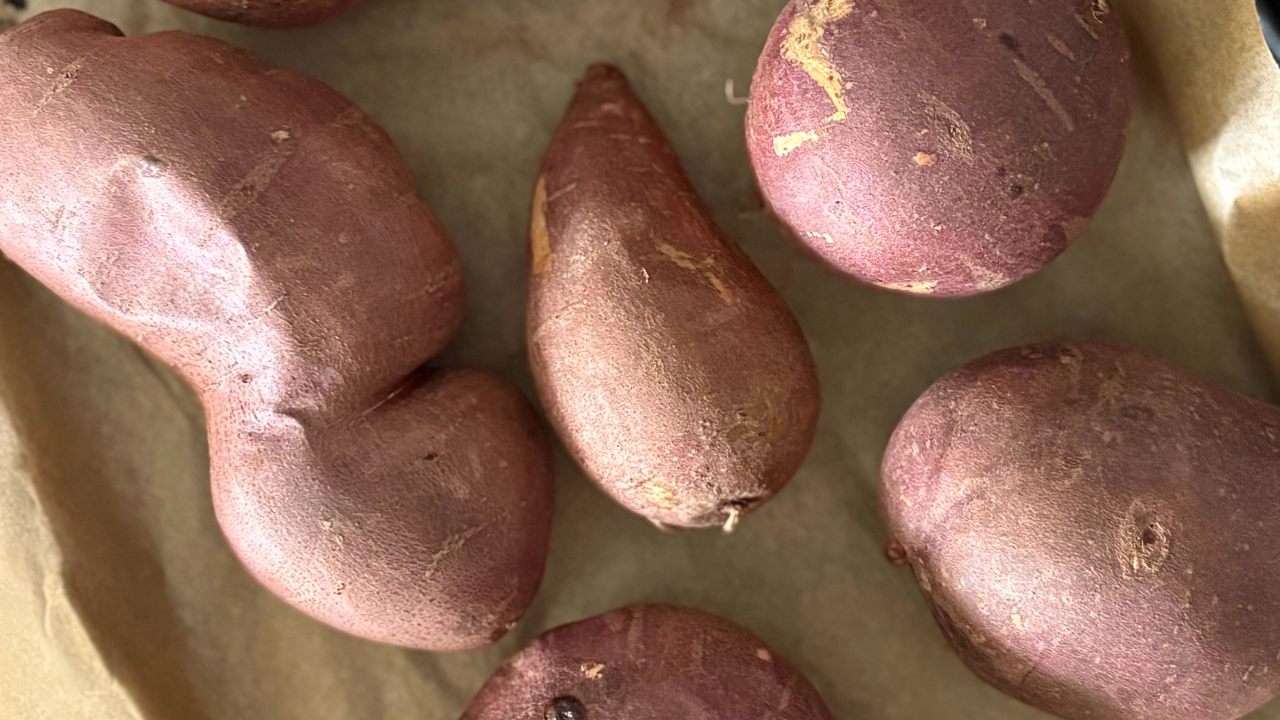
Currently Loving Series
The Japanese Sweet Potato: A Blue Zone Staple Worth Loving
What Makes It So Special
The Japanese sweet potato — known as satsuma-imo — is not your average sweet potato. With its deep purple skin and creamy, golden interior, it is denser, less sweet, and far more complex in flavor than the orange variety most of us grew up with. It roasts beautifully, satisfies deeply, and happens to be one of the most nutrient-rich foods you can put on your plate.
It is also a cornerstone of one of the longest-living populations on earth.
How the Okinawans Eat It
The Okinawans of Japan — one of the original Blue Zone communities — historically derived an extraordinary 60% of their total calories from the sweet potato. Not protein. Not fat. A starch. A humble root vegetable that grew abundantly in their soil and became the foundation of a diet that produced some of the highest concentrations of centenarians in the world.
They did not fear it. They did not count its carbs. They ate it boiled, steamed, and simply prepared — often as the center of the meal, not the side.
And they lived, vibrantly, well past 100.
Why Starch Is Not the Enemy
Here is what the diet industry has spent decades getting wrong: starch, in its whole food form, does not make you fat. Processed food does.
The Japanese sweet potato is rich in a specific type of starch called resistant starch — and this is where the magic lives. Resistant starch behaves more like fiber than a traditional carbohydrate. It passes through your small intestine largely undigested, feeds the beneficial bacteria in your gut, and produces short-chain fatty acids that reduce inflammation and support a healthy metabolism.
What this means practically:
- It keeps you full for hours. The resistant starch slows digestion and blunts blood sugar spikes, so you are not hungry again an hour later.
- It feeds your gut. A healthy gut microbiome is directly linked to healthy weight regulation — and resistant starch is one of the best foods you can offer it.
- It does not spike blood sugar the way refined carbs do. Especially when cooked and cooled (more on that in a moment).
The Cook and Cool Secret
Here is a detail that most people miss entirely.
When you cook a Japanese sweet potato and then allow it to cool before eating — or reheat it after cooling — the resistant starch content actually increases. The cooling process changes the molecular structure of the starch in a way that makes it even more fiber-like, even more gut-friendly, even slower to digest.
This is why a cold roasted sweet potato the next day is not just convenient — it is nutritionally superior. The Blue Zone populations who ate these foods simply, without overthinking them, were intuitively doing exactly what the science now confirms.
How to Enjoy It, Divine Nutrition Style
You do not need a recipe. You need a potato and an oven.
Roast it whole at 400°F until the skin blisters and the interior is soft and almost caramelized — about 45 to 60 minutes. Let it cool. Eat it as is, or top it simply with a drizzle of good olive oil and a pinch of sea salt. Let it be the main event, not the afterthought.
Or slice it, roast it with a little coconut oil and cinnamon, and serve it alongside a simple green salad. Humble. Satisfying. Exactly the kind of meal that has kept populations thriving for centuries.
This is Divine Nutrition — eating God’s foods, the way they were meant to be eaten, to release weight for the last time.
Was this newsletter helpful for you?
Join me! Sign up to receive my bi-weekly newsletter with tips, tricks and mindset hacks to uplevel your health, wellness and sustainable weight loss game.
Don't worry, your information will not be shared.
We hate SPAM. We will never sell your information, for any reason.
